
Our Products
Recycled rubber & tyre-derived materials, graded for every industry
From whole scrap tyres to fine rubber mesh and clean recovered steel, we source and export a full range of tyre-derived commodities to exact customer specifications.
01 · Raw Material
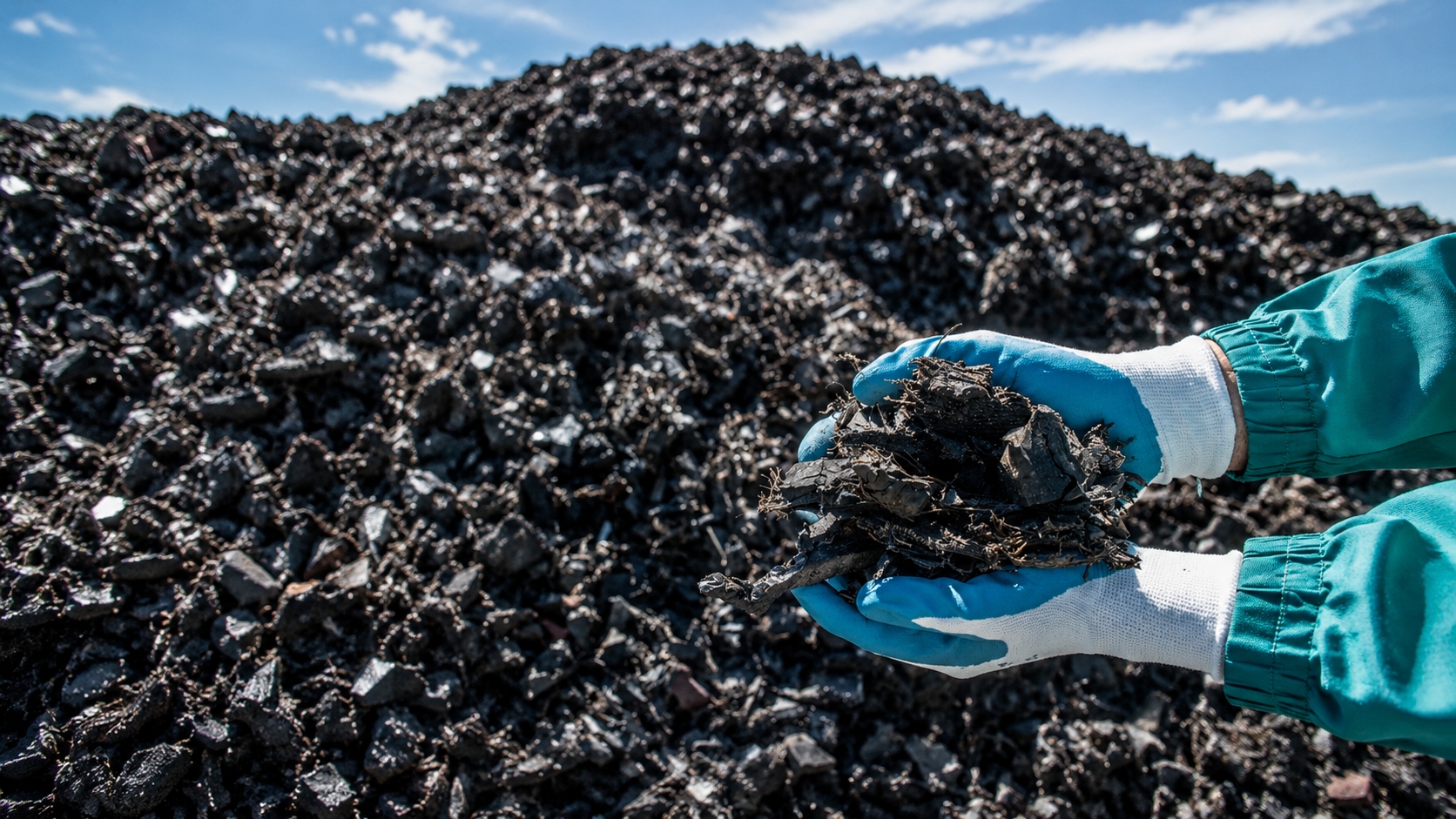
Scrap Tyres & Shredded Rubber
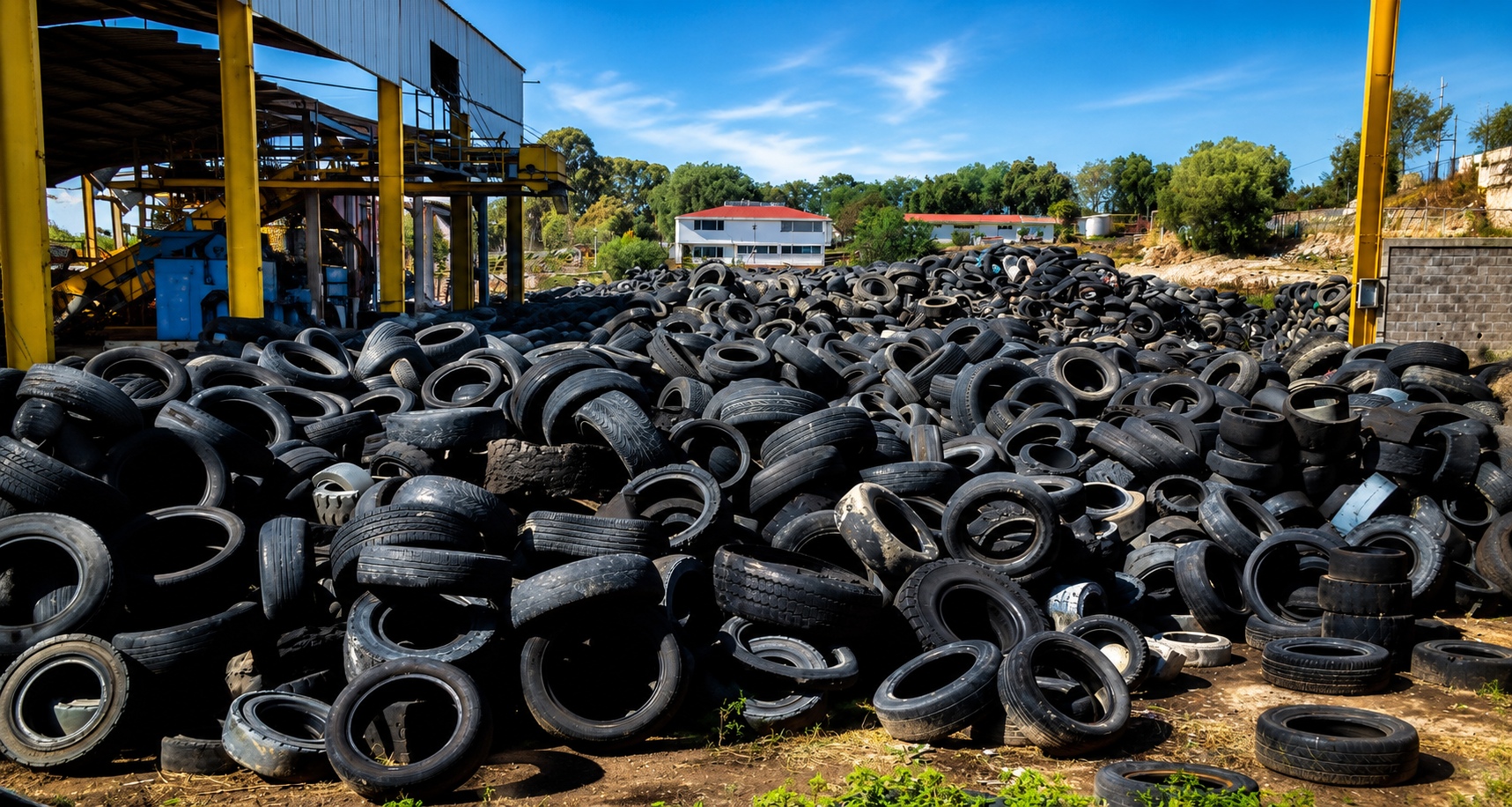
Superworld Resources supplies quality scrap tyres or shredded tyres to recycling companies, processors, and manufacturers worldwide.
We source passenger tyres (PCR), truck and bus tyres (TBR), off-the-road (OTR) tyres, agricultural tyres, and industrial tyres according to customer specifications. Our international sourcing network ensures consistent supply volumes while meeting export requirements and quality standards.
- Tyre Recycling
- Rubber Processing
- Alternative Fuel Production
- Material Recovery
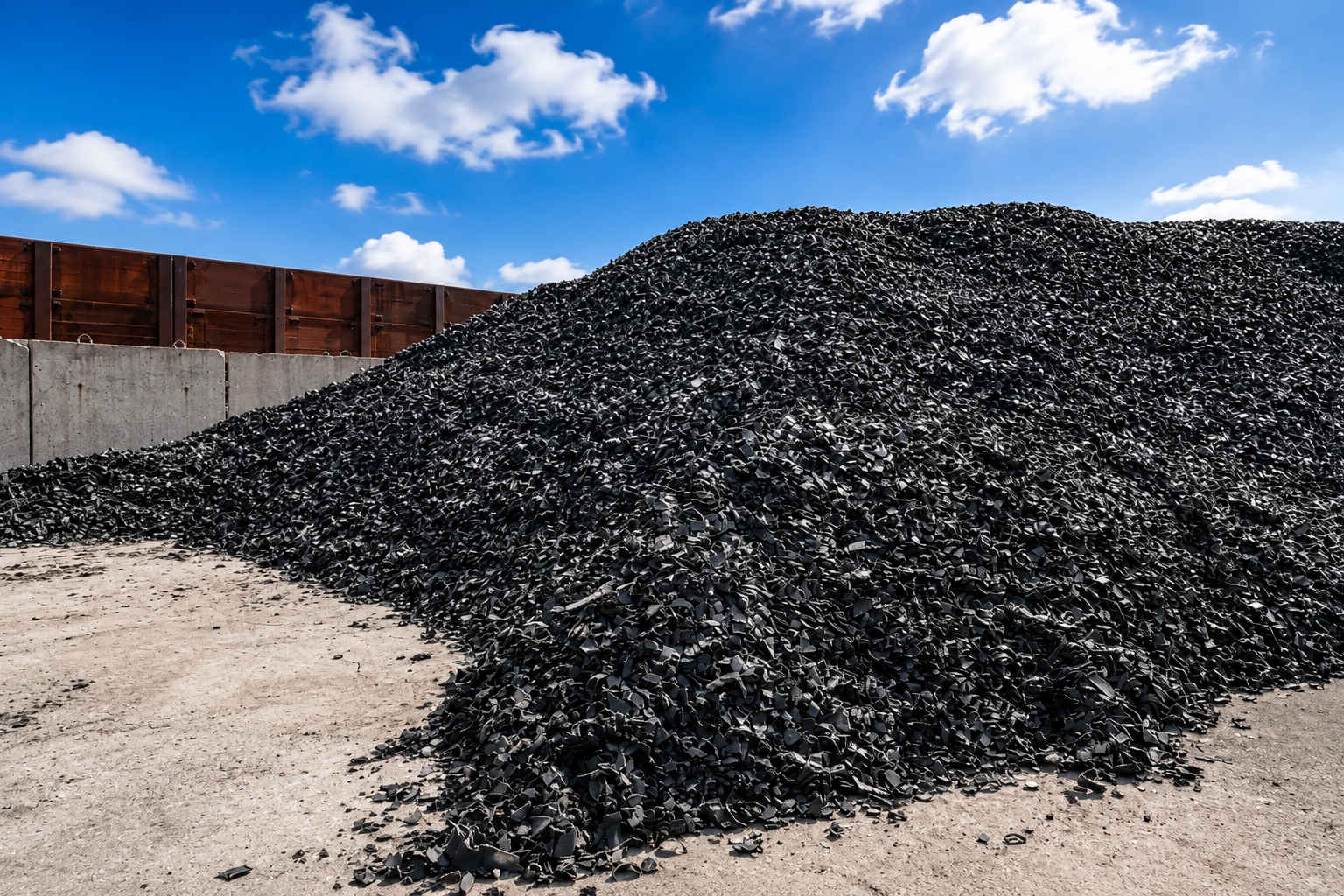
Shredded Tyre Spec
- Size Grade ≤ 150mm
- Tyre Types PCR / TBR
- Also Sourced OTR, Agricultural, Industrial
- Supply Basis Customer Specification
Shredded Tyre Spec
| Physical Characteristic | PCR (Passenger Car Radial) | TBR (Truck & Bus Radial) |
|---|---|---|
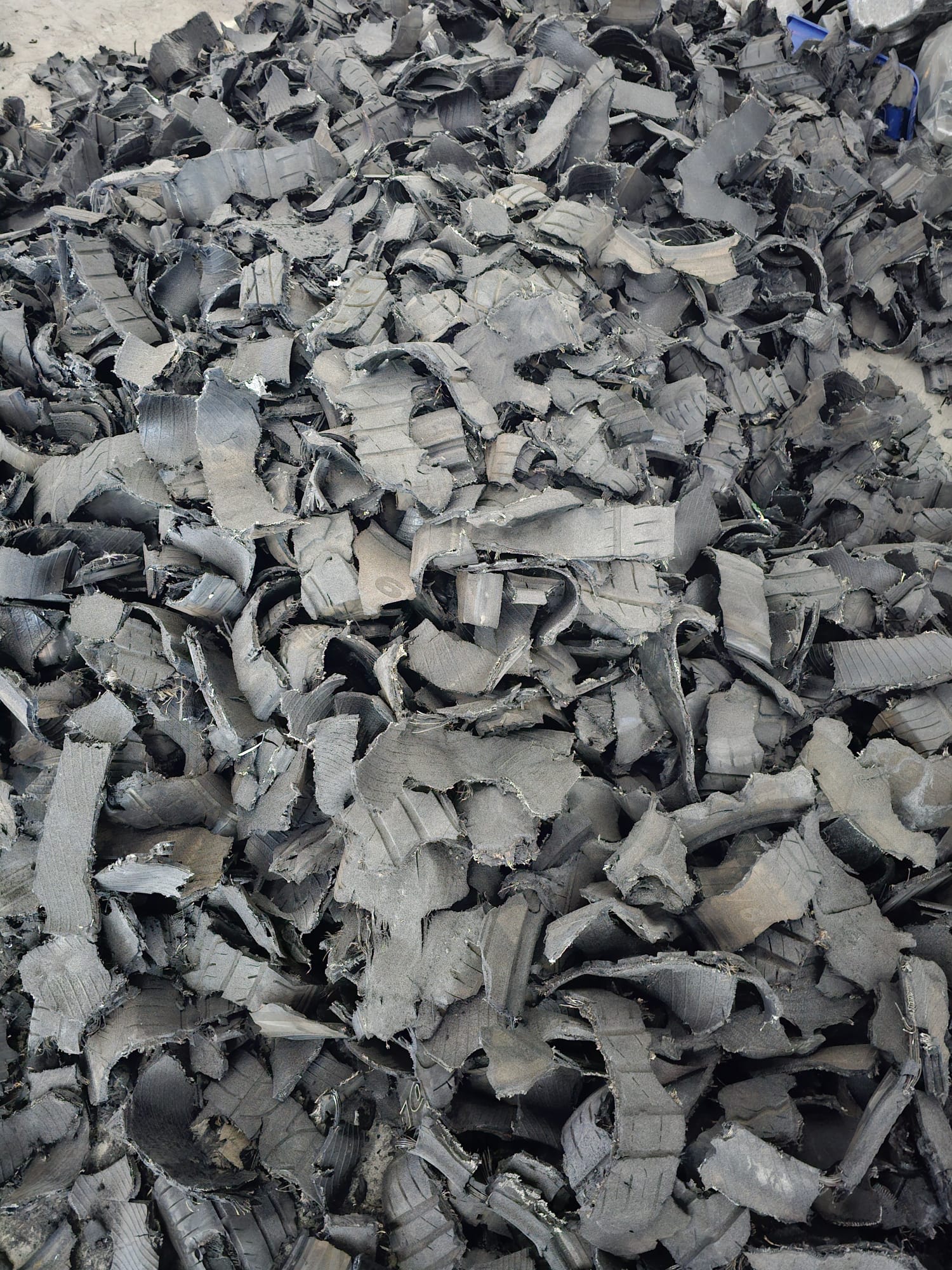
| Rubber Composition | High synthetic rubber (SBR), lower natural rubber. | High natural rubber (for heavy-load heat dissipation). |
| Textile / “Fluff” Content | High. Visible white synthetic strings (nylon, polyester, rayon) heavily fraying from the cut edges. | Very Low to None. Built almost entirely of steel and dense rubber. |
| Steel Wire Profile | Thin, highly pliable, and lightweight steel wire protruding. | Thick, rigid, high-tensile steel (especially bead wire) protruding. |
| Chunk Density & Weight | Lighter, softer, and slightly more flexible. | Extremely dense, heavy, and rigid. |
Baled Scrap Tyres
Shredded Tyre Chunks, ≤150mm
Shredded Rubber Detail
02 · Engineered Fuel
Tyre Derived Fuel (TDF)
TDF is produced by processing end-of-life tyres into uniform pieces designed to be burned as a supplemental, high-energy fuel in heavy industrial applications — cement kilns, pulp and paper boilers, and power plants.
Because TDF is an engineered fuel, its physical profile is heavily regulated and strictly defined by the facility burning it.
- Tyre Recycling
- Rubber Processing
- Alternative Fuel Production
- Material Recovery
Sizes & Grades
- Whole Tyres Massive Cement Kilns
- Coarse 100–150mm
- Medium ~50mm, Std. Boilers
- Fine / De-wired ~25mm, Paper Mills
12,000–16,000
BTU / lb Energy Output
25–50%
More Energy Than Coal
<2%
Moisture Content
5–10%
Ash & Steel Residue in Cement
| High Energy | Produces 12,000 to 16,000 BTU/lb — 25% to 50% more energy than coal. |
| Low Moisture | Under 2% moisture content, meaning it burns instantly and efficiently. |
| Zero Waste in Cement | Leaves 5% to 10% ash and steel, which absorbs directly into the cement as raw iron, eliminating landfill waste. |
Chemical Breakdown
| Component | Approximate Percentage |
|---|---|
| Carbon | 82% – 85% |
| Hydrogen | 6% – 8% |
| Sulfur | 1% – 2% |
The Carbon Offset Advantage (Biomass)
| Tyre Type | Biogenic Fraction |
|---|---|
| PCR (Passenger) TDF | ~17% to 20% biomass |
| TBR (Truck) TDF | ~28% to 30% biomass |
| OTR TDF | ~35% to 45%+ biomass |
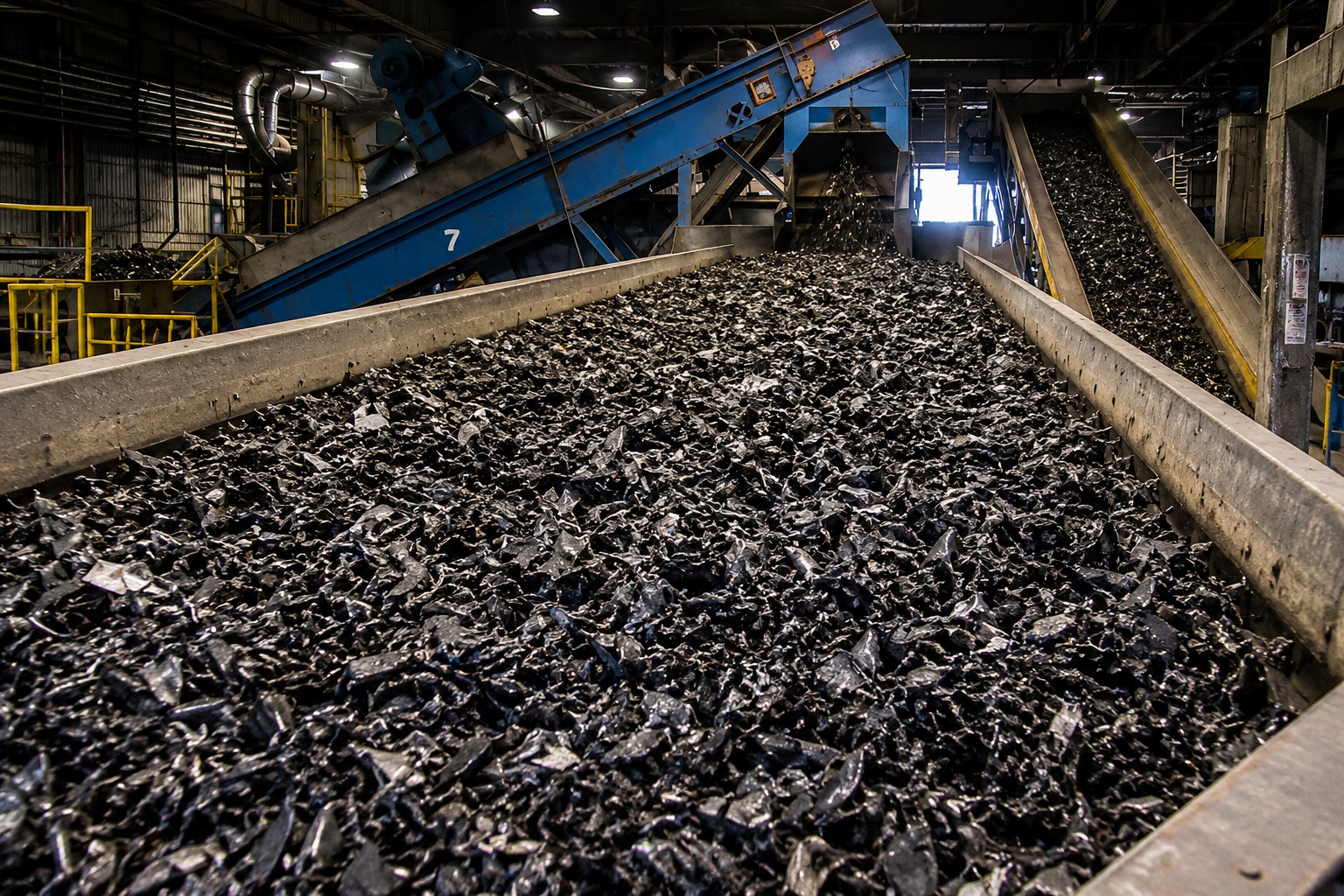
TDF Stockpile
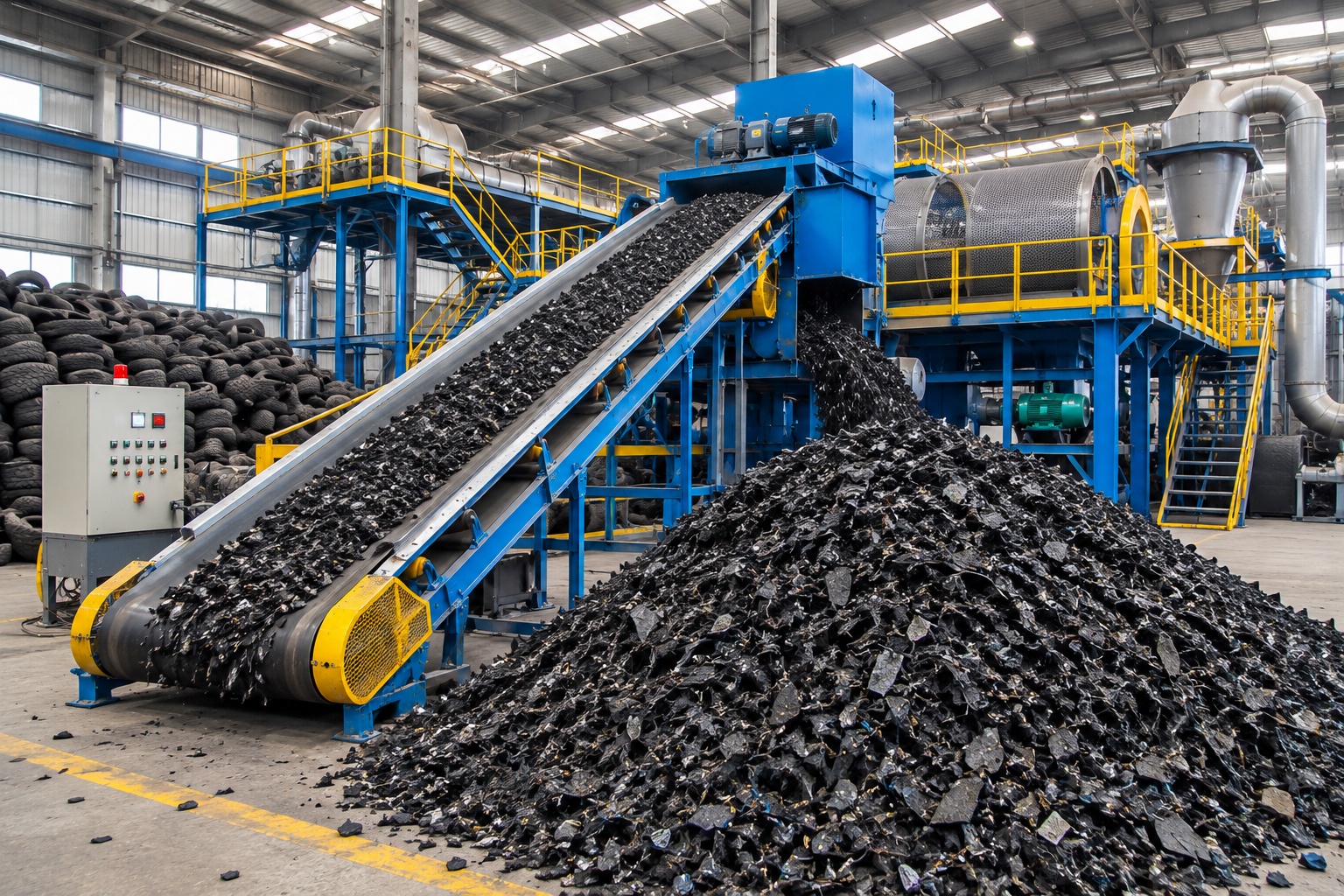
Industrial Kiln Application
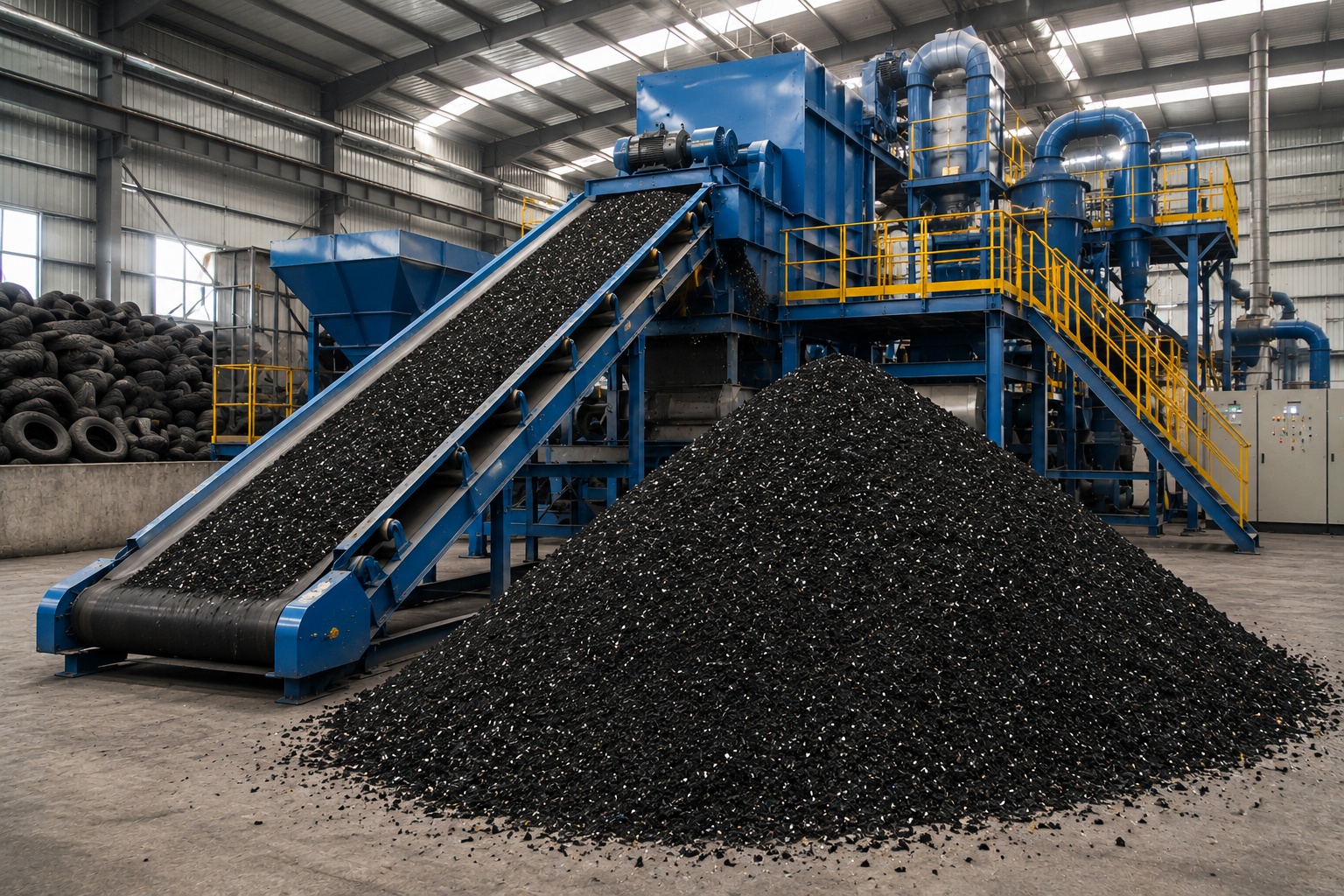
TDF Ready For Transport
03 · Refined Materials
Crumb Rubber & Rubber Mesh
- Tyre Recycling
- Rubber Processing
- Alternative Fuel Production
- Material Recovery
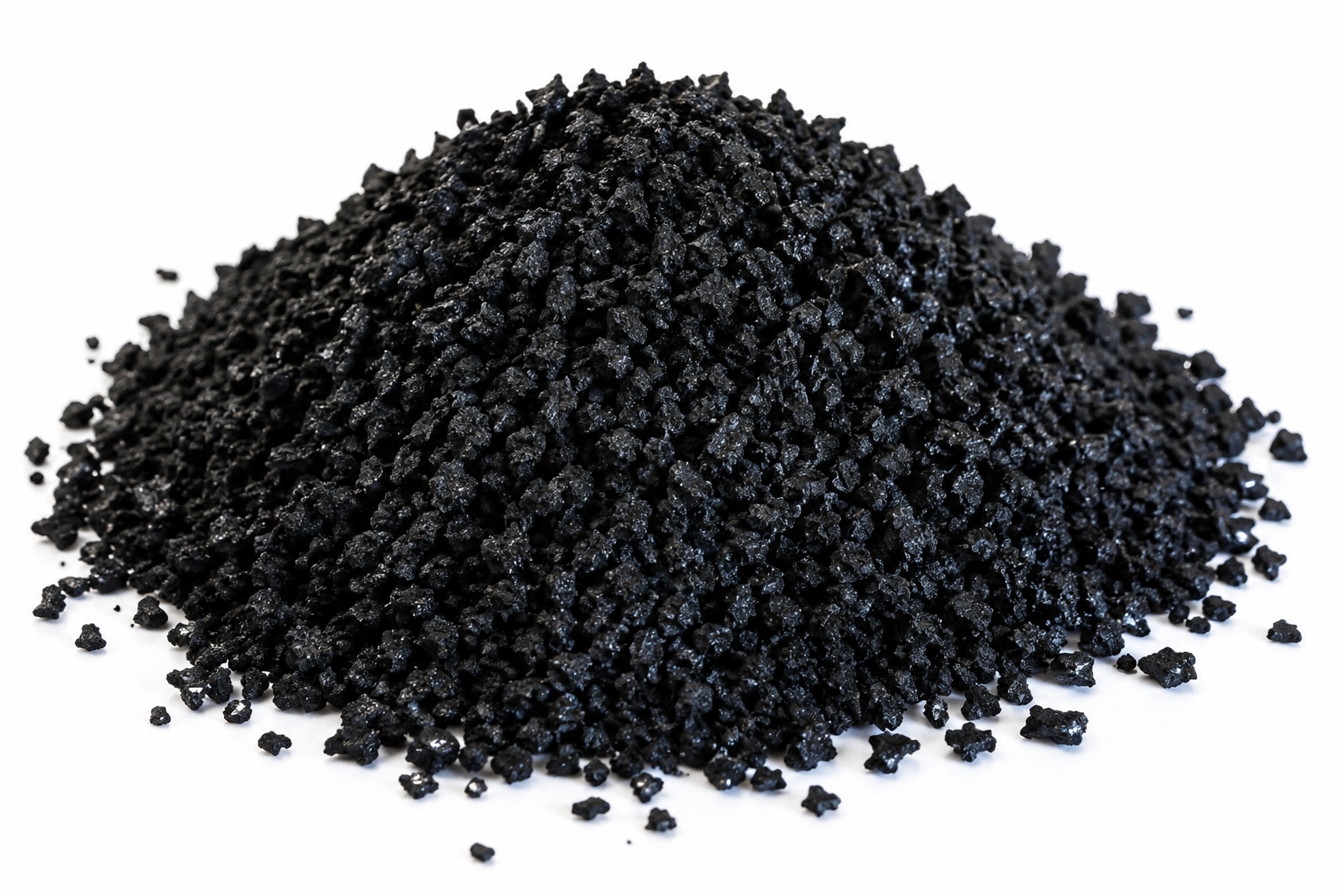
Rubber Crumb
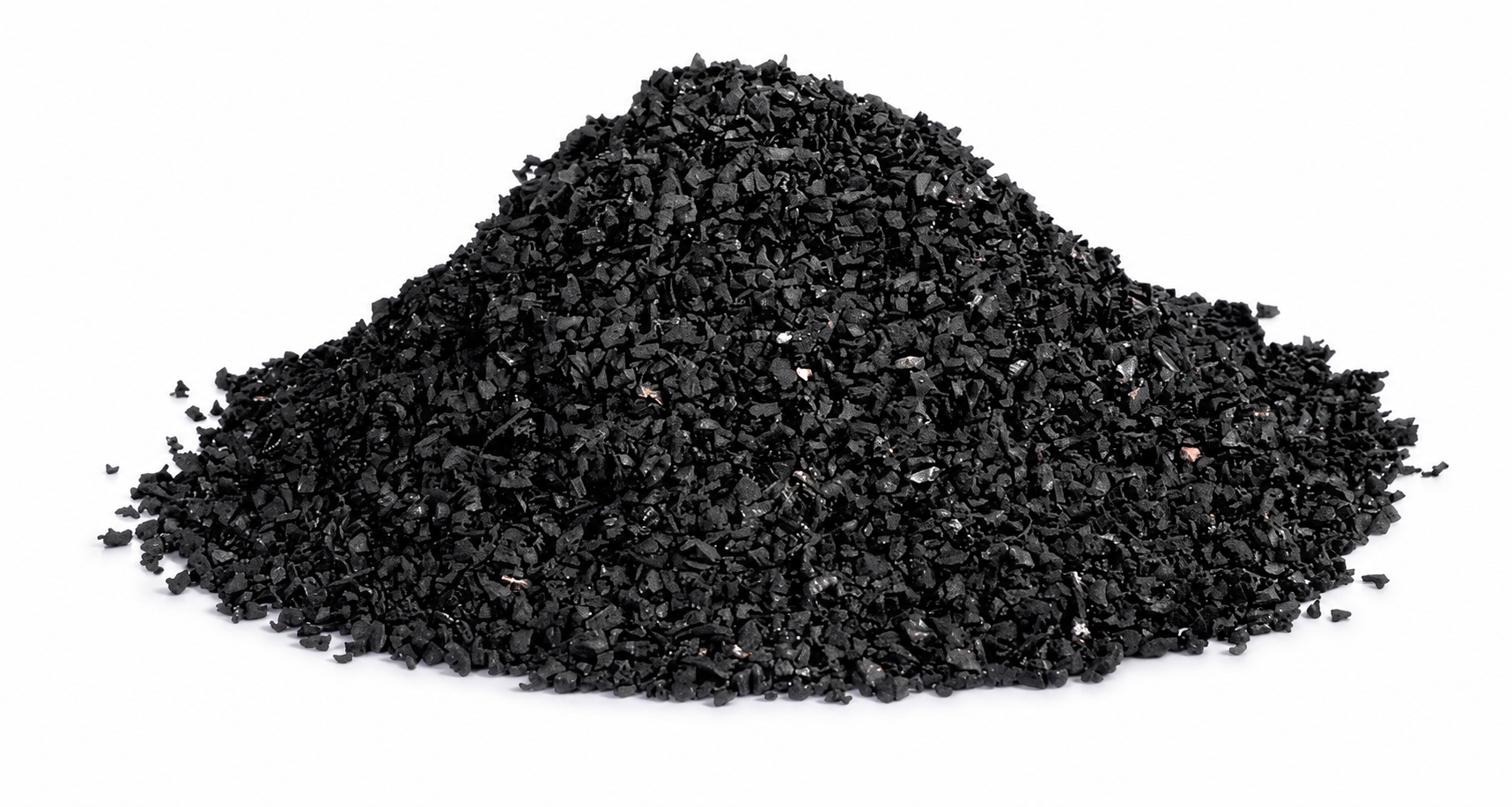
Shredded Tyre Chunks, ≤150mm
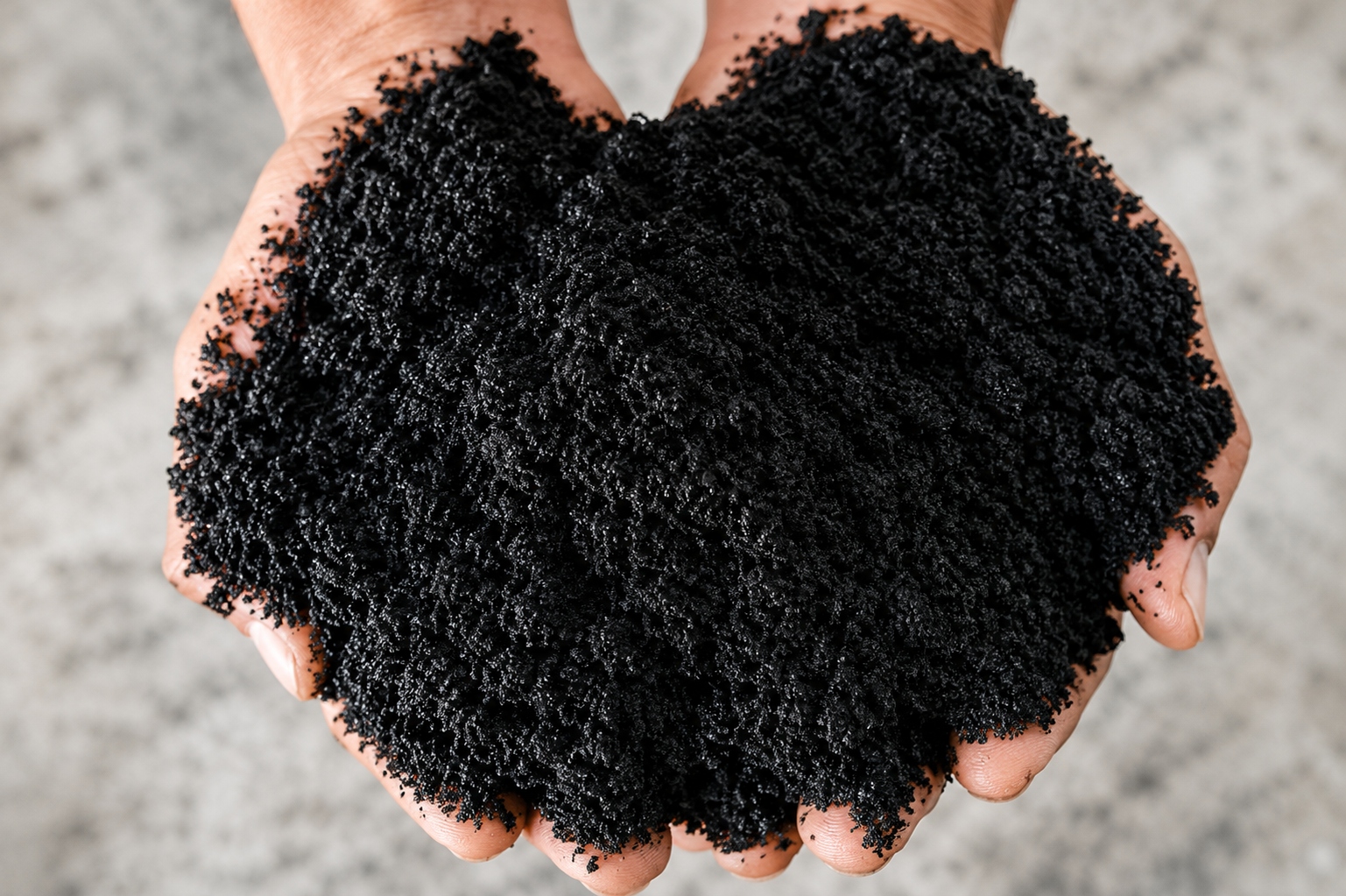
Shredded Rubber Detail
1. Crumb Rubber (Granules)
Crumb rubber is the primary refined product that comes out of a secondary tyre recycling plant. It consists of distinct, highly durable, visible rubber granules resembling coarse black sand or small gravel chips.
The Process: Produced using standard industrial raspers and granulators that physically chop the rubber down at room temperature.
Core Applications: Because of its larger, shock-absorbing size and durability, it is heavily favored in civil and recreational sectors — the global standard for synthetic sports turf infill, playground safety flooring, running tracks, and heavy molded rubber mats.
- Sizing 1mm–5mm
- Appearance Coarse Black Sand / Gravel Chips
- Process Ambient Rasping & Granulating
2. Rubber Mesh (Rubber Powder)
Rubber mesh — often called crumb rubber powder or micro-mesh — is crumb rubber that has been processed much further down the line until it becomes a fine particulate, ranging from fine black sand to a highly refined, dust-like flour.
The Process: Requires highly specialized micro-milling machinery. In many cases, it requires cryogenic grinding — freezing the rubber with liquid nitrogen and shattering it — to achieve a dust-like state without friction melting the rubber.
Core Applications: Used almost exclusively in chemical and industrial manufacturing. It is blended into virgin rubber compounds to manufacture brand-new tyres, automotive parts, industrial sealants, adhesives, and high-performance rubberized asphalt.
- Sizing 20 / 40 / 80 Mesh
- Appearance Fine Sand to Dust-Like Flour
- Process Micro-Milling / Cryogenic Grinding
Side-by-Side Comparison
| Feature | Crumb Rubber | Rubber Mesh (Powder) |
|---|---|---|
| Particle Size Metric | Millimeters (mm) | Mesh Screen Size (20 / 40 / 80) |
| Physical Size | Large (1mm to 5mm) | Fine to ultra-fine (under 1mm) |
| Physical Texture | Coarse, granular, bouncy | Smooth, powdery, dust-like |
| Production Method | Standard ambient granulation | Micro-milling or cryogenic grinding |
| Production Cost | Moderate | High |
04 · Secondary Commodity
Recovered Tyre Steel
Recovered Tyre Steel is the highly valuable, secondary commodity produced during the mechanical tyre recycling process. While the primary goal of tyre recycling is to recover the rubber, modern commercial tyres — especially Truck and Bus Radial (TBR) and Off-The-Road (OTR) tyres — are highly engineered structures that consist of up to 20% to 25% high-tensile steel by weight.
Commercial Applications
- Steel Mills Electric Arc Furnaces & Foundries
- Civil Engineering Concrete Micro-Reinforcement
- Industrial Abrasives / Shot Blasting Media
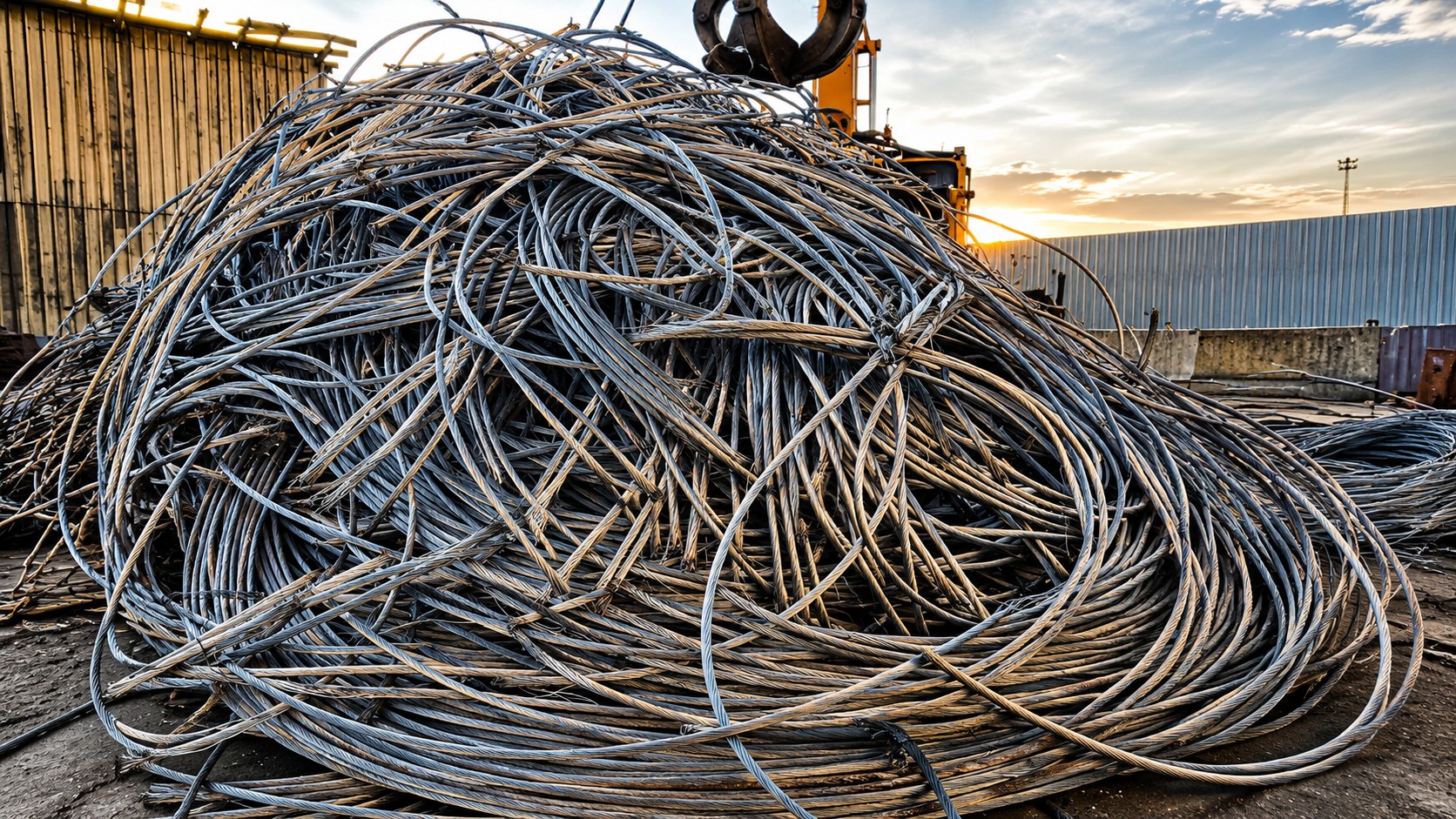
Recovered High-Tensile Wire
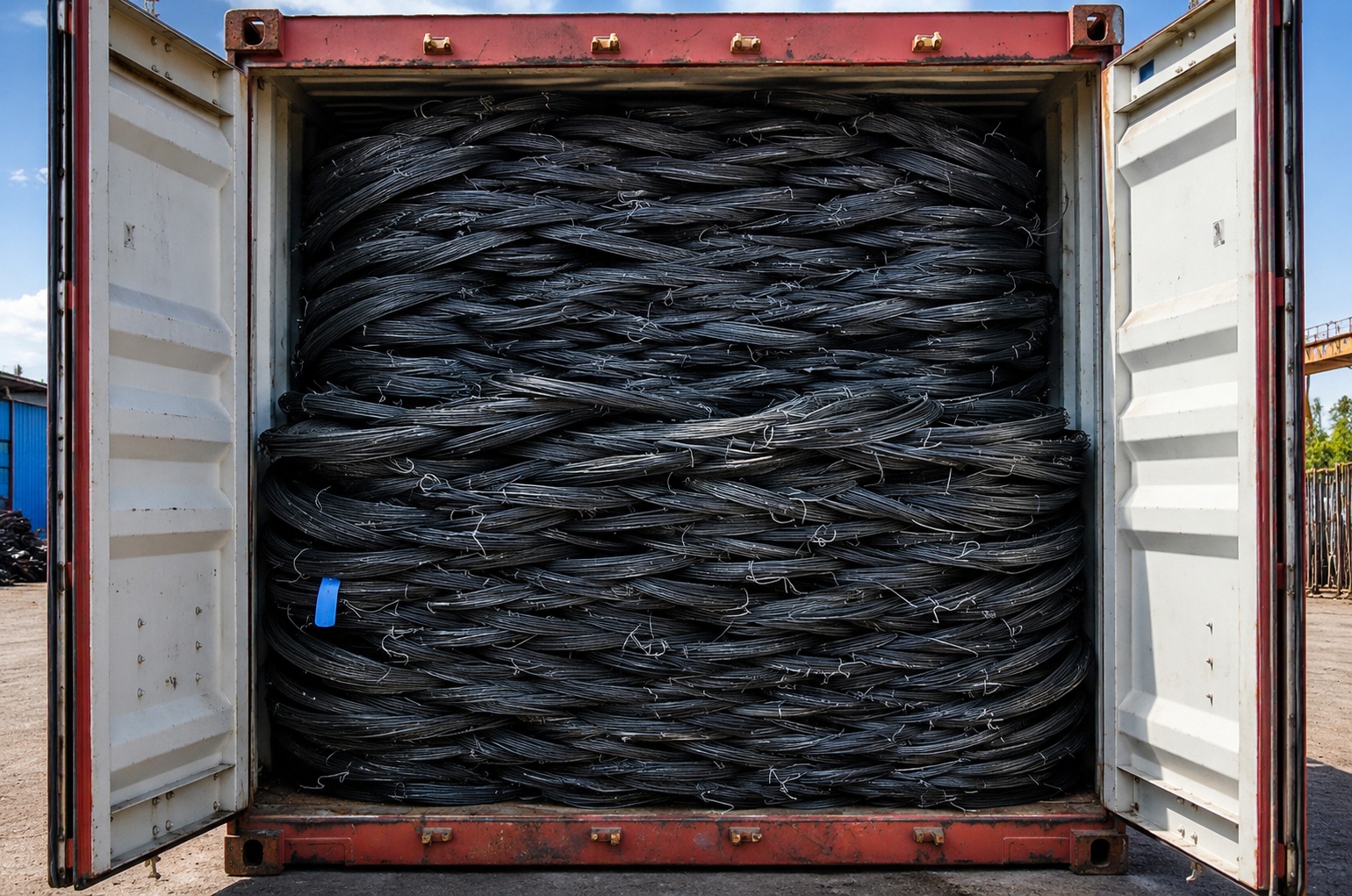
Baled Wire, Container-Ready
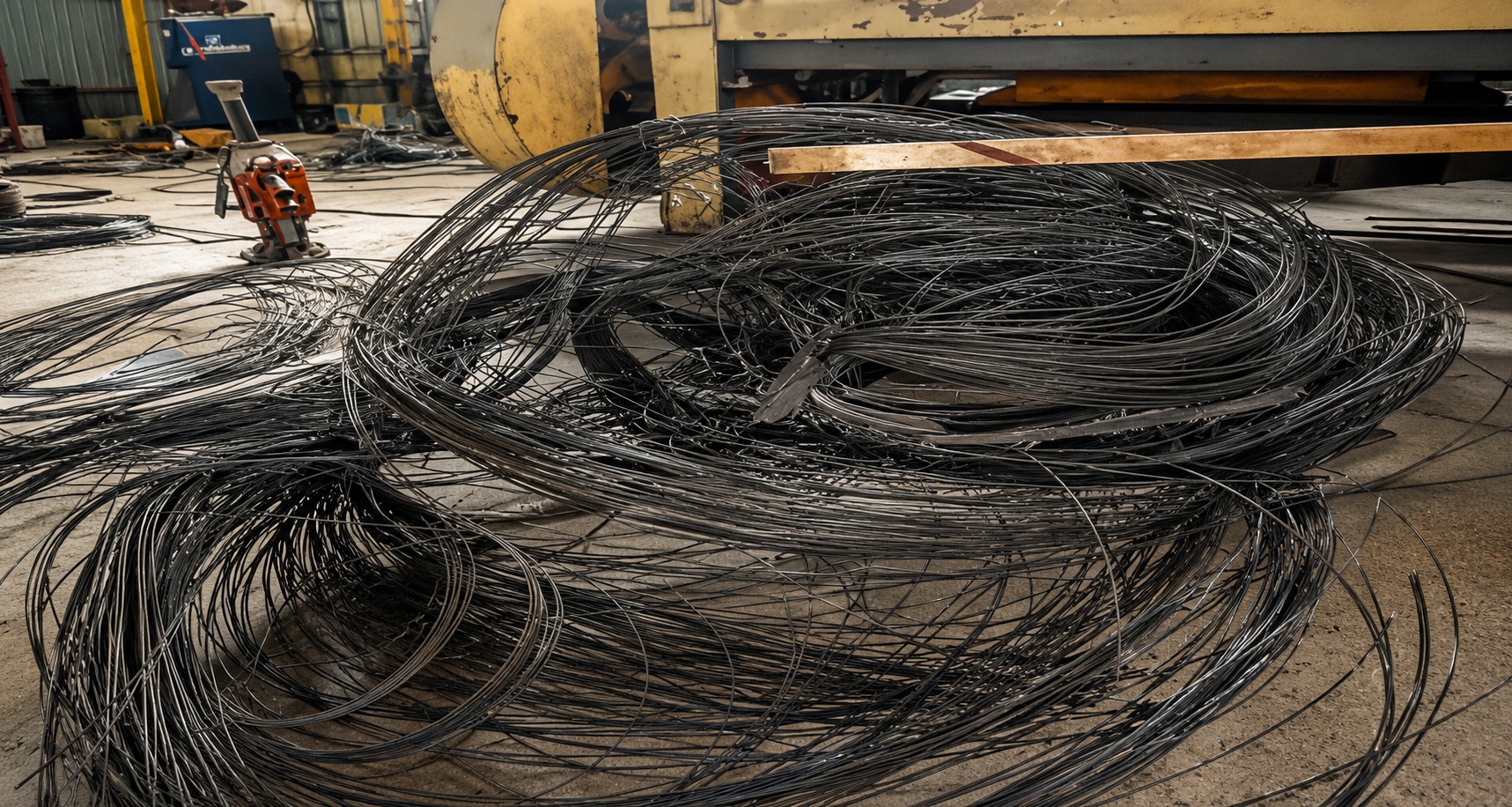
Coiled Wire At Processing Facility
The Physical & Metallurgical Profile
| High-Tensile Strength | Tyre wire is predominantly high-carbon steel, engineered to withstand extreme flexing, high pressure, and heavy load weights without snapping. |
| Brass / Bronze Coating | To help the vulcanized rubber chemically bond to the steel during tyre manufacturing, the bead wire and radial belt wires are often coated in a very thin layer of brass or bronze. |
| Physical Appearance | It looks like a tangled, dense “bird’s nest” of sharp, wiry strands, ranging from very thin threads (from the tread belts) to thick, rigid loops (from the bead). |
Quality Grades & The Valuation Challenge
The commercial value of recovered tyre steel is dictated entirely by its purity. Steel mills do not want to put rubber into their furnaces.
Grade 3
High Contamination. Freshly extracted wire off the first magnet, containing 10–20% residual rubber and textile. Lowest market value; typically sold to scrap aggregators for further processing.
Grade 2
Medium Contamination. Wire that has passed through a secondary cleaning system, such as a wire-cleaning trommel screen or a secondary magnet. Contains roughly 3–5% rubber.
Grade 1
Clean Wire. Highly processed, containing less than 1–2% rubber. This is premium scrap that can be sold directly to steel mills for a high price.
The Extraction Process
Tyre steel cannot be pulled out of a whole tyre — it must be mechanically liberated during the shredding process.
Primary Shred
Tyres shredded to <150mm chunks; steel remains firmly embedded inside the thick rubber blocks.
Secondary Shred
Chunks fed into secondary shredders and raspers, grinding the rubber to roughly 20mm or smaller and finally breaking the rubber–steel bond.
Magnetic Separation
Powerful, suspended cross-belt electromagnets pull the steel wire up and out of the stream, dropping it into a collection bin while clean rubber continues down the line.
Commercial Applications
Once aggregated and compressed into massive, dense bales, recovered tyre steel is exported and sold into three primary industries:
| Electric Arc Furnaces & Foundries | Because it is high-carbon scrap, steel mills melt the baled tyre wire down alongside other scrap metals to manufacture brand-new structural steel, such as rebar or I-beams. |
| Concrete Micro-Reinforcement | In some advanced civil engineering applications, clean, chopped tyre wire is mixed directly into industrial concrete instead of traditional steel mesh, providing superior tensile strength and crack resistance for concrete slabs. |
| Abrasives Manufacturing | Cleaned and chopped tyre steel is sometimes melted down and reformed into steel shot, used in heavy industrial sandblasting (shot blasting) to clean metal surfaces. |
05 · Value-Added Products
Recycled Rubber Products
The final, value-added stage of the supply chain. Once shredded, de-wired, and granulated into crumb rubber or fine rubber mesh, raw materials are manufactured into durable, commercial-grade finished products — inheriting tyre rubber’s resistance to friction, heavy loads, and severe weather.
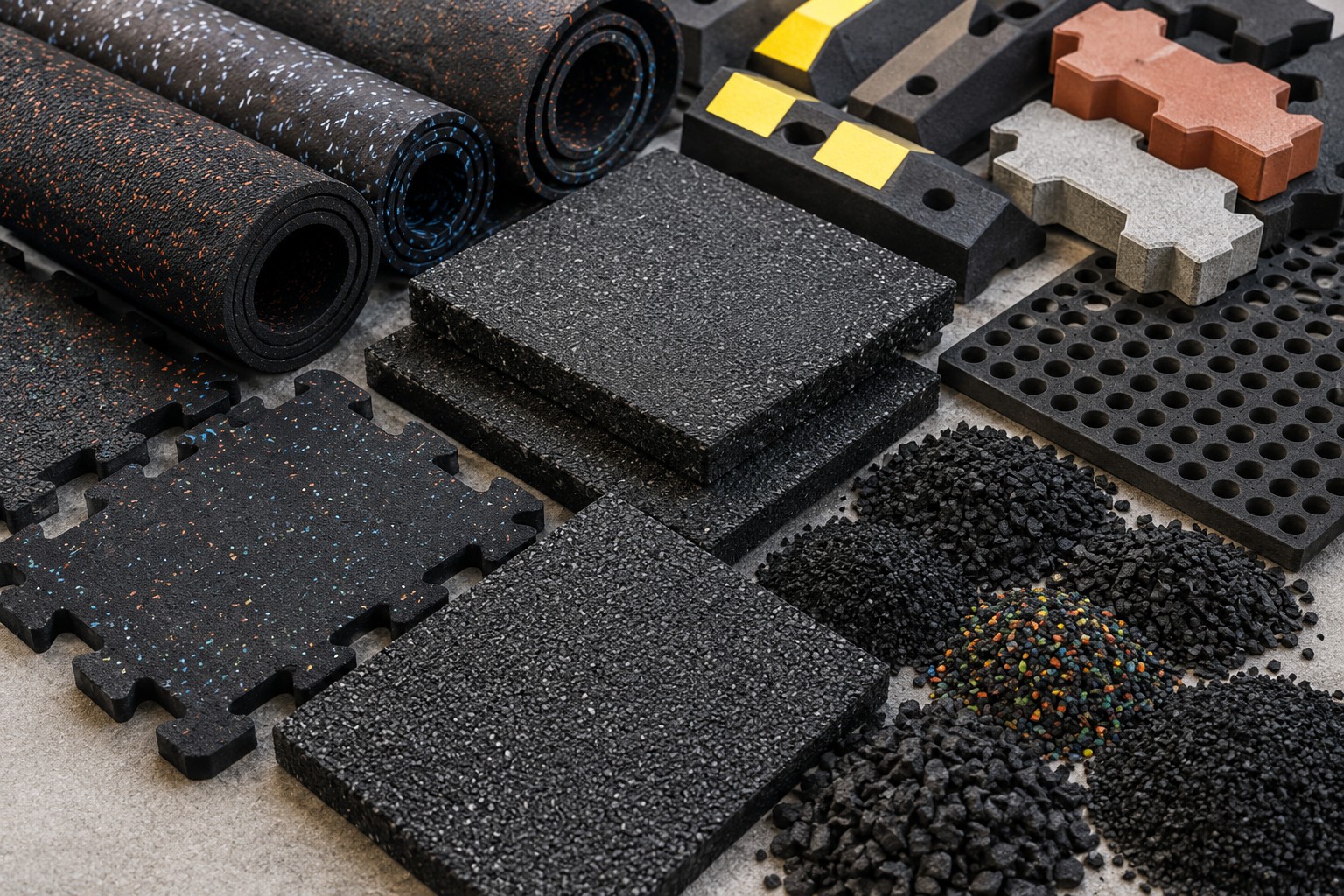
Rubberized Asphalt
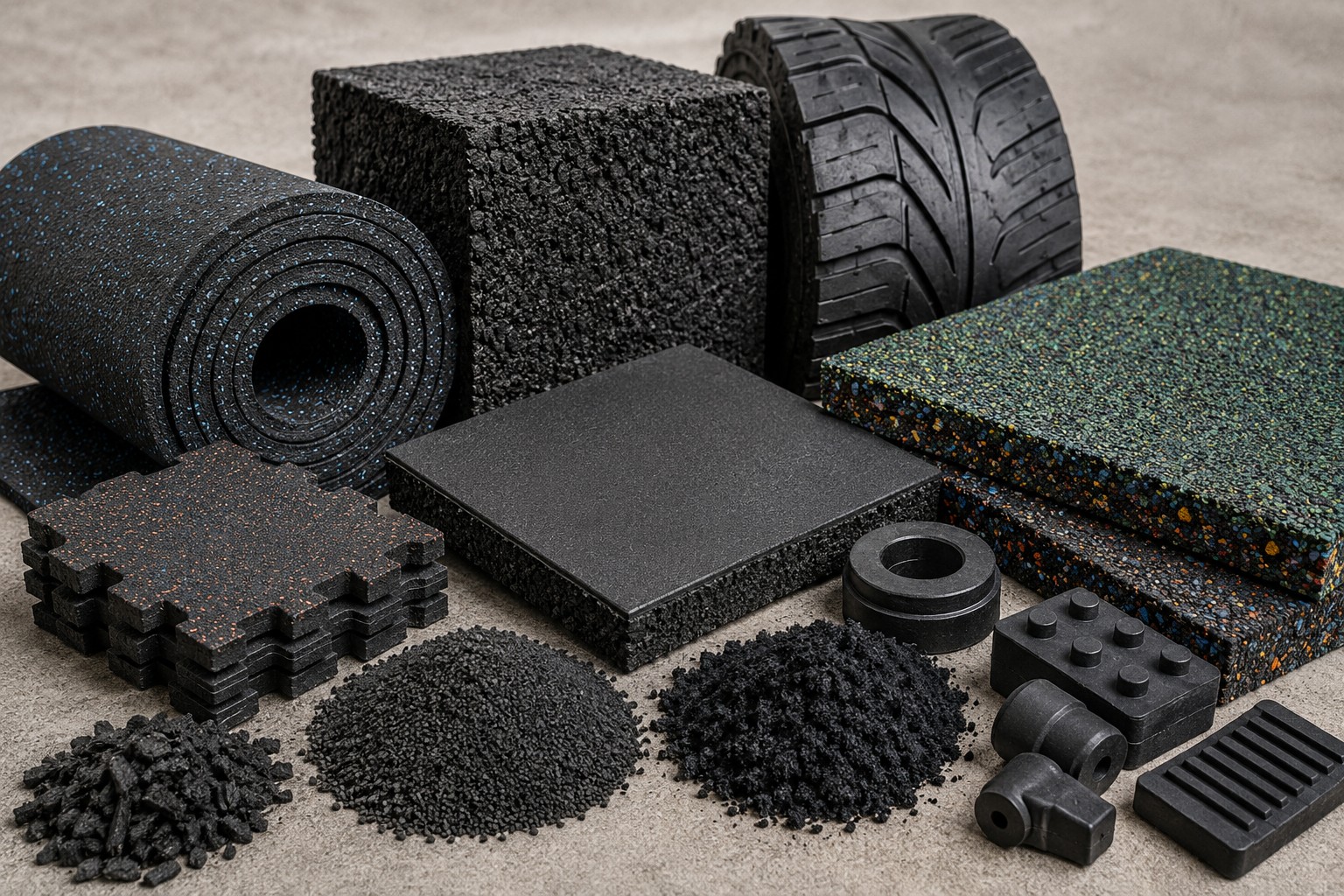
Tiles, Mats & Molded Products
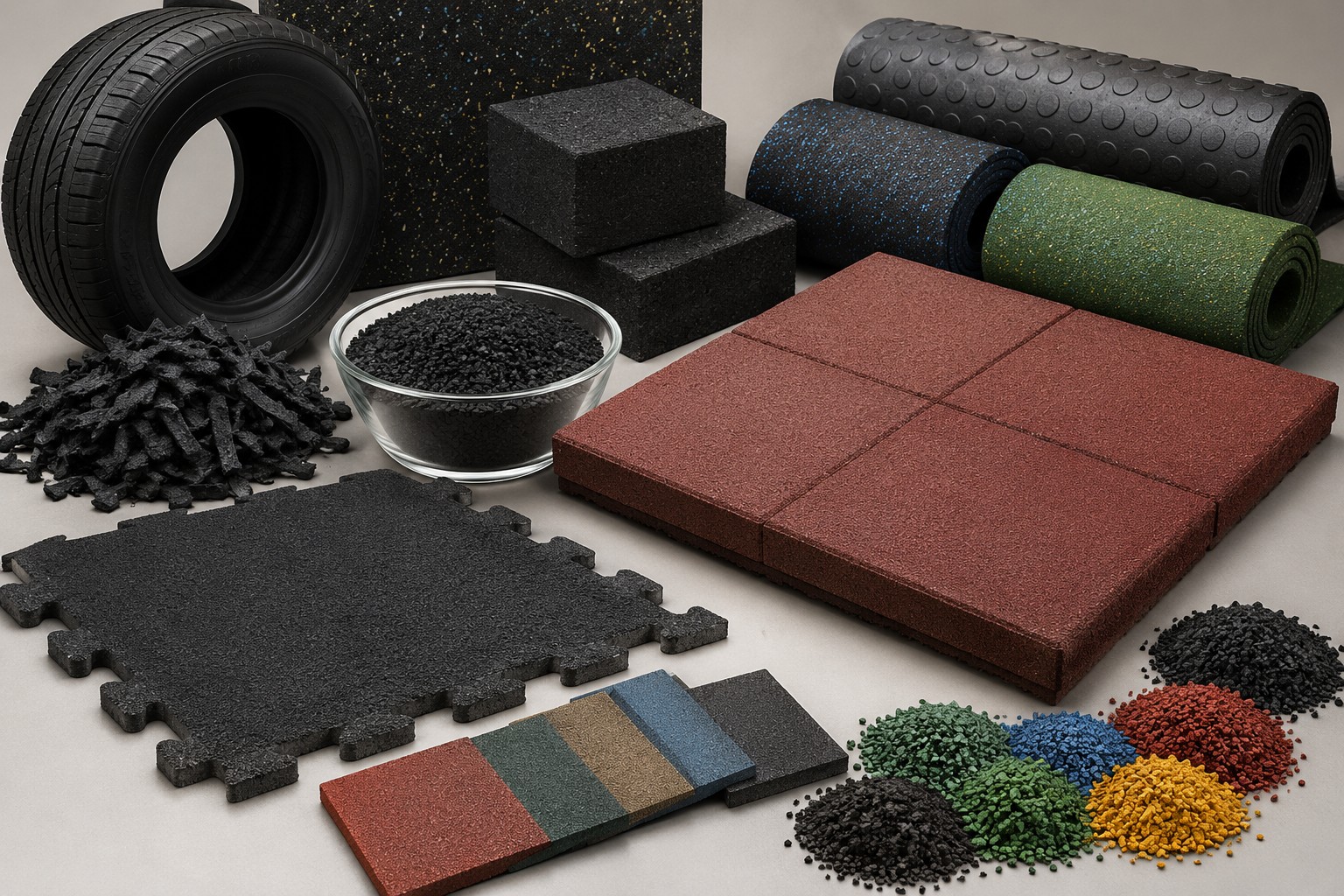
Traffic Safety Products
The Physical & Metallurgical Profile
- Rubberized Asphalt — fine rubber mesh (typically 30–40 mesh) blended into hot bitumen for quieter highways that resist thermal cracking, rutting, and water pooling.
- Acoustic & Vibration Underlay — heavy-duty rolled rubber mats used in high-rises to reduce sound transmission, and as ballast mats under light rail lines to absorb kinetic vibration.
Sports & Recreation
- Synthetic Turf Infill & Running Tracks — shock-absorbing crumb rubber for artificial fields and tracks.
- Playground Safety Tiles — polyurethane-bound crumb rubber meeting fall-height safety standards.
Traffic Safety & Logistics
- Traffic Management — modular speed bumps, parking blocks, and wheel stops.
- Industrial Logistics — dock bumpers and wheel chocks for freight hubs.
Agricultural & Industrial Matting
- Anti-Fatigue Mats — interlocking workshop flooring that relieves joint stress.
- Equine / Livestock Matting — non-slip, insulating mats for stables and dairy parlors.
From Raw Material to Finished Good
Once aggregated and compressed into massive, dense bales, recovered tyre steel is exported and sold into three primary industries:
| Raw Material Grade | Manufacturing Process | Primary Finished Products |
|---|---|---|
| Large Chunks (TDA) | Used “as-is” in civil works | Landfill drainage layers, retaining wall backfill |
| Crumb Rubber (1–5mm) | Polyurethane binding / molding | Playground tiles, turf infill, workshop matting |
| Rubber Mesh (Powder) | Vulcanization / heat blending | Rubberized asphalt, molded traffic safety products, new tyres |
Ready to work with a trusted trading partner?
Tell us what you’re looking to source or supply, and our team will get back to you.